More Than the Right Answer: The Art of Advising at ghSMART


A few years ago, a ghSMART advisor partnered with the CEO and founder of a fast-growing, private equity-backed financial technology company.
The CEO was, by his own account, accustomed to being one of the sharpest thinkers in the room and confident in his point of view. He valued people who could keep pace with him intellectually and challenge his thinking rather than simply agree with it.
In one of their first sessions, he spent twenty minutes explaining why the process his leadership team was going through was "performative nonsense," testing the thinking behind the approach and the ghSMART advisor leading it.
The advisor didn’t back away.
For the advisor, that was part of what made the engagement so compelling. To earn credibility with this particular leader, it wouldn’t be enough to bring a proven methodology or polished recommendations. The advisor would need to understand him deeply, engage him at his level, challenge him when it mattered, and build a relationship strong enough to support conversations that went well beyond the surface.
At ghSMART, there’s a saying: everything is data. That means every interaction matters. Every challenge, every objection, every intellectual sparring match provides insight into how a leader thinks, what motivates them, and where they may be getting in their own way.
Before beginning a coaching engagement, ghSMART advisors conduct a rigorous assessment process paired with 10 to 15 in-depth 360 interviews. The goal is not simply to evaluate leadership capability. It’s to understand the person behind the role.
To illustrate the situation, AI was asked to summarize the CEO's 360 feedback in a single image. Given his fascination with AI, it felt appropriate. The results were memorable (😅):

Rich assessment data provides more than a view of how someone is likely to perform against a particular mandate. It can reveal patterns that help an advisor understand not just what a leader does, but why those patterns may be showing up.
In this case, the assessment helped the advisor see beyond the CEO’s intensity. His drive to hold his ground was only part of the story. Past experiences continued to shape how he showed up as a leader, leaving significant leadership potential untapped. Understanding that distinction mattered. Challenging the behavior without understanding the person behind it was unlikely to create meaningful change.
What Good Assessment Actually Gives You
When assessment is done well, leaders can be understood surprisingly quickly. Not through guesswork, but through rigorous information gathering and thoughtful synthesis.
That means examining the twists and turns of someone's career, collecting candid feedback from the people around them, and evaluating their strengths and weaknesses against the leadership challenges they face.
For the advisor, the assessment created both an intellectual challenge and a path into the relationship. The work was not simply to synthesize the data correctly. It was to determine which patterns mattered most, how they connected, and how to share those insights in a way the CEO would genuinely engage with.
The CEO respected people who could reason with evidence. Arriving with a sharp understanding of both him and his business gave the advisor the credibility to challenge his thinking rather than simply react to it.
Many leaders are surrounded by people who have opinions. Far fewer are surrounded by people who have done the work necessary to challenge them credibly.
That credibility opened the door to greater honesty. Rather than telling the CEO who he should be, the advisor could hold up a clear, evidence-based picture of the patterns others were experiencing and help him decide what he wanted to do with that information.
A few days after receiving his report, he shared that his wife had read it and joked that it had him completely figured out.
It was a funny moment, but it revealed something important. The person who knew him best immediately recognized him in its pages.
Trust was beginning to form.
From Credibility to Trust
Trust doesn't come automatically in this line of work. ghSMART advisors work with some of the most senior leaders in the world, many of whom have spent years developing strong instincts and deeply held points of view.
Like any meaningful relationship, coaching requires time, consistency, credibility, and care.
When new advisors join ghSMART, conversations about coaching relationships often begin with the trust equation:
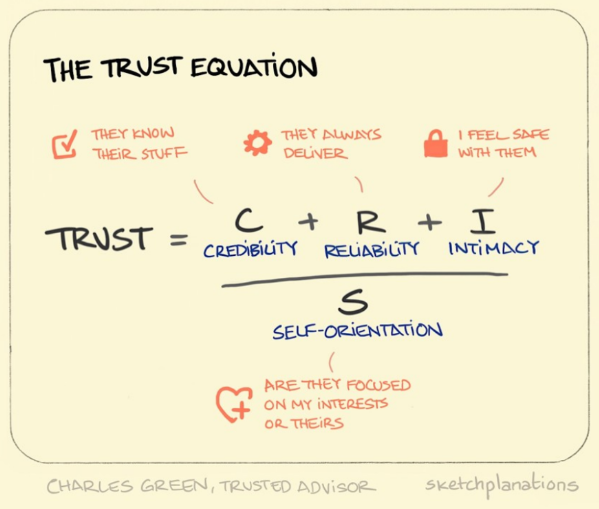
For this advisor, building trust meant knowing when to challenge the CEO and when to listen. The assessment created the initial credibility, but the relationship deepened through how the advisor showed up: prepared, direct, curious, and genuinely invested in understanding both the leader and the person behind the role.
That balance is part of what makes this work uniquely challenging. An advisor needs the analytical rigor to make sense of complex leadership dynamics and the judgment to know how and when to act on what they see.
As trust grew, the conversations changed.
Discussions about strategy evolved into discussions about leadership. Discussions about leadership became discussions about life. Instead of arriving primarily ready to defend a point of view, the CEO increasingly had space to examine one.
This evolution reflects an important distinction between being a consultant and being an advisor.
Traditional consulting often focuses on the "what" of a problem: analyses, recommendations, presentations, and deliverables. Advisory work focuses on the "who," which requires equal if not more attention to the human being behind the problem.
The goal is not simply to help leaders make better decisions. It's to help them better understand themselves.
For an advisor, that creates a different kind of problem to solve. There isn't always a neat deliverable or single right answer. The work requires connecting data, business context, behavior, and human motivation, then determining what will genuinely help a leader move forward.
Why This Is the Work Worth Doing
Over time, this CEO began letting his guard down in the small ways that matter.
He started discussing ideas before he had made up his mind instead of after. He became more honest about what he didn't know. Conversations became less about proving a point and more about exploring one. The leader behind the intellect began to step forward.
For the advisor, those shifts were the impact. The work wasn't about making the CEO less intense or changing the qualities that had contributed to his success. It was about helping him recognize when those same strengths could get in his way and giving him a trusted space to lead with greater awareness and intention.
One of the clearest signs of trust is when an executive calls at 9 p.m. on a Friday night, not because they need a deliverable, but because they want your perspective.
The relationship has moved beyond expertise. You've become someone they trust.
And for many advisors, that is what makes this work so rewarding. You get to solve difficult, intellectually demanding problems, but the outcome isn't a presentation or recommendation. It's watching someone begin to see themselves differently and knowing you've earned enough trust to help them do something with that insight.
Assessment helps reveal who leaders are. Credibility earns the right to be heard. Trust creates the opportunity for meaningful growth.
For ghSMART advisors, that's ultimately the work: understanding people deeply, helping them understand themselves, and earning the trust required to make a lasting impact.
It's harder than it sounds. And it's every bit as rewarding as you'd imagine.
If you're energized by solving complex leadership challenges through insight, trust, and genuine human connection, explore a career at ghSMART.